Receiving and discrepancy report
This report follows every purchase order from delivery to acceptance. Use it to spot partial deliveries, open discrepancies and orders with no documents on file.
Before you start
- You need a role that can open Reports and Extracts: IT Business Systems or Application Team, IT Hardware Inventory Supervisor, Dedicated IT Warehouse Administrator or CDI Staff, ITD Head and Management, IT Service Governance, IT Service Operations, Infrastructure or Cloud Team, Asset and Logistics Associate, or IT Warehouse Technical Team.
Steps
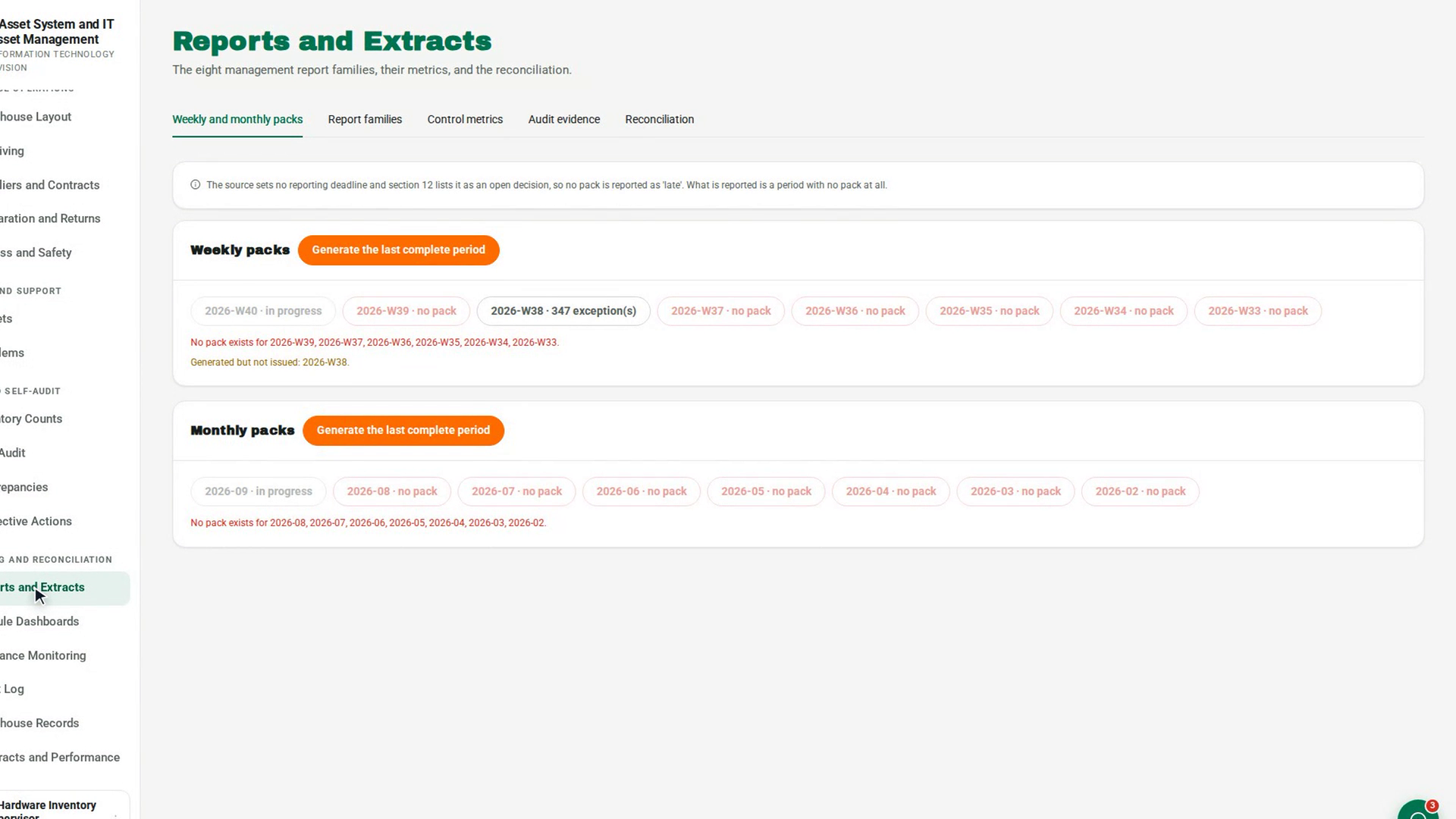
Open Reports and Extracts
In the sidebar, under Reporting and Reconciliation, select Reports and Extracts. The page opens on the Weekly and monthly packs tab.
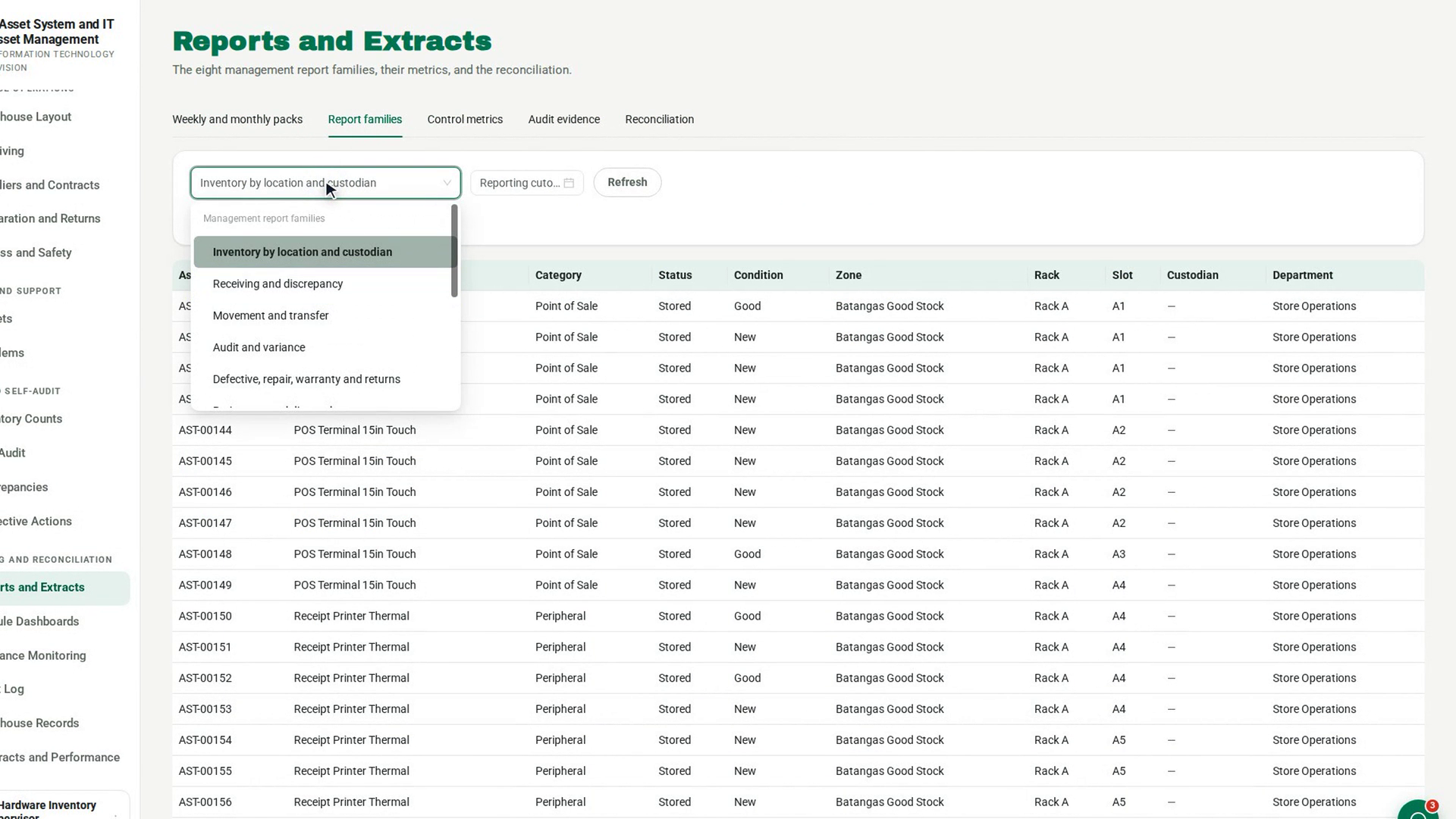
Open the Report families tab
Select the Report families tab. It shows a report list, a Reporting cutoff date and Refresh.
Choose the report
In the list, under Management report families, choose Receiving and discrepancy. The line under the list describes what it covers: Deliveries, accepted and partial lines, rejection or damage, unresolved discrepancies and pending documents.
Set a reporting cutoff
If the report is for a set reporting date, pick it in Reporting cutoff, then select Refresh. Without a cutoff the report shows live data.
Read the rows
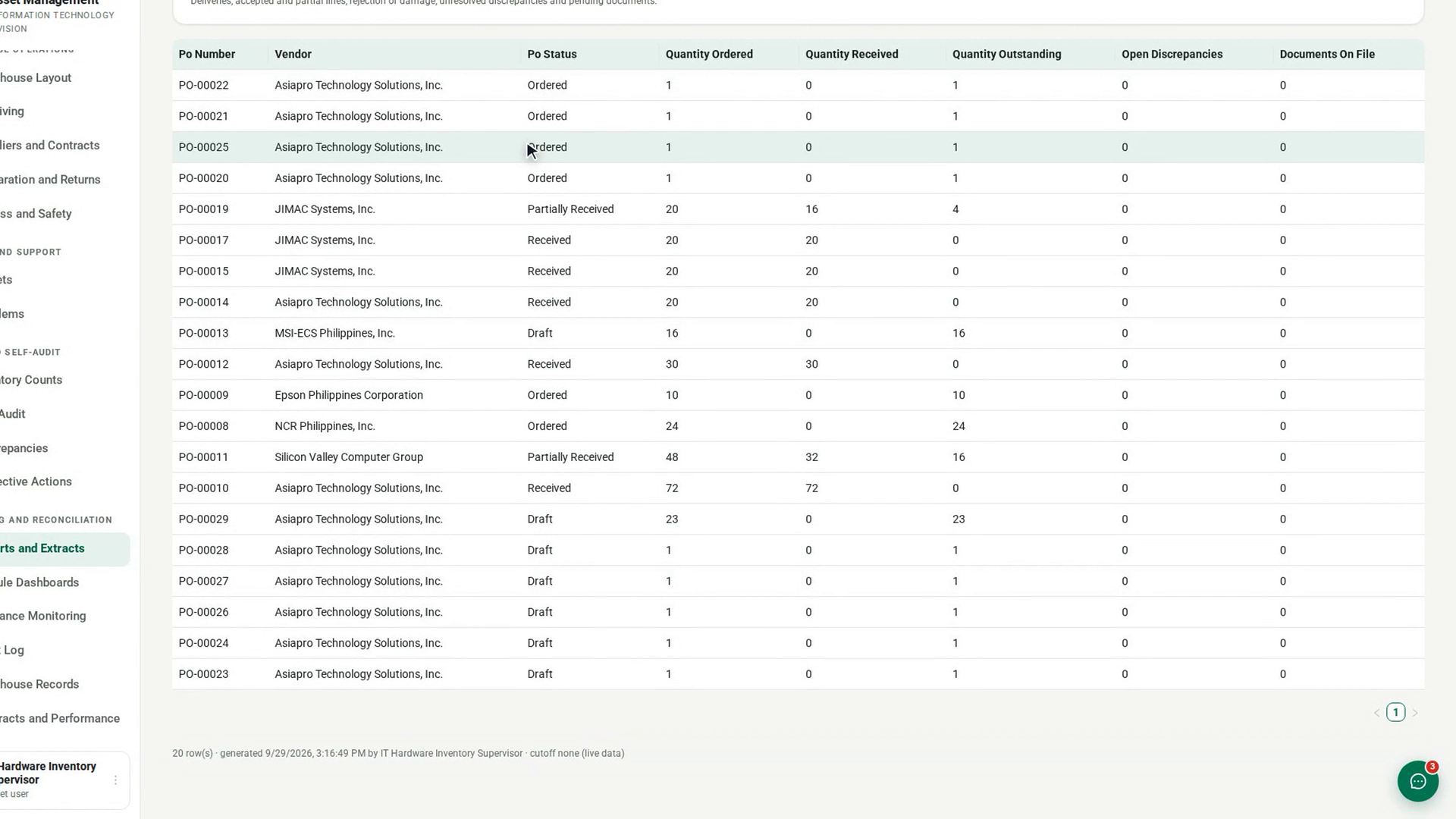
The table shows Po Number, Vendor, Po Status, Quantity Ordered, Quantity Received, Quantity Outstanding, Open Discrepancies and Documents On File. One row is one purchase order, newest first. Quantity Outstanding is what was ordered but not yet received, and Open Discrepancies counts the order's discrepancies that are not closed. If nothing matches, you see No rows at this cutoff.
Check where the figures came from
Under the table, a line shows the number of rows, when the report was generated and by whom, and the cutoff it was run at. Keep this with any figure you pass on.
Screenshots
Step 1: Open Reports and Extracts
Step 2: Open the Report families tab
Step 3: Choose the report
Step 4: Set a reporting cutoff
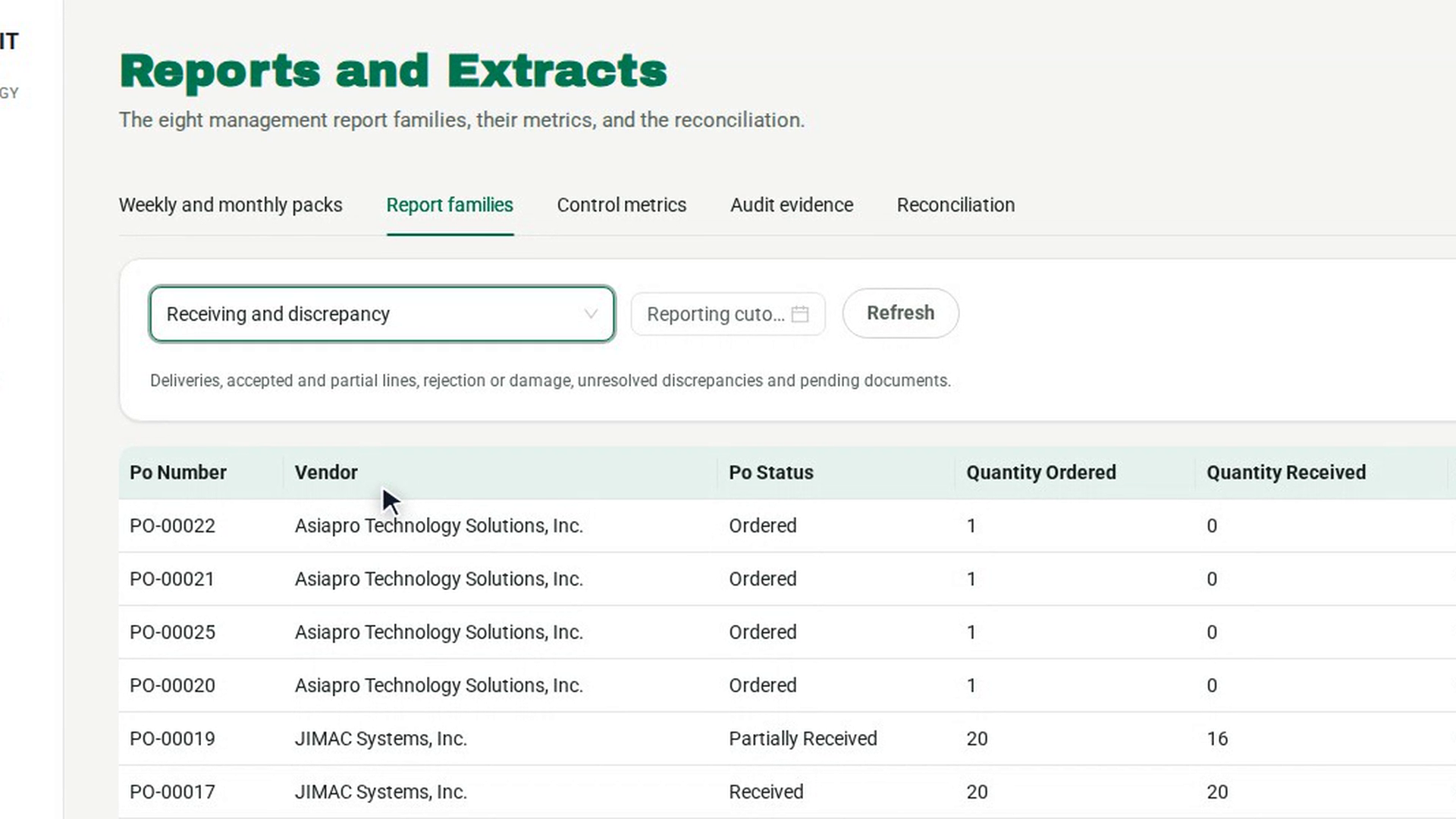
Step 5: Read the rows
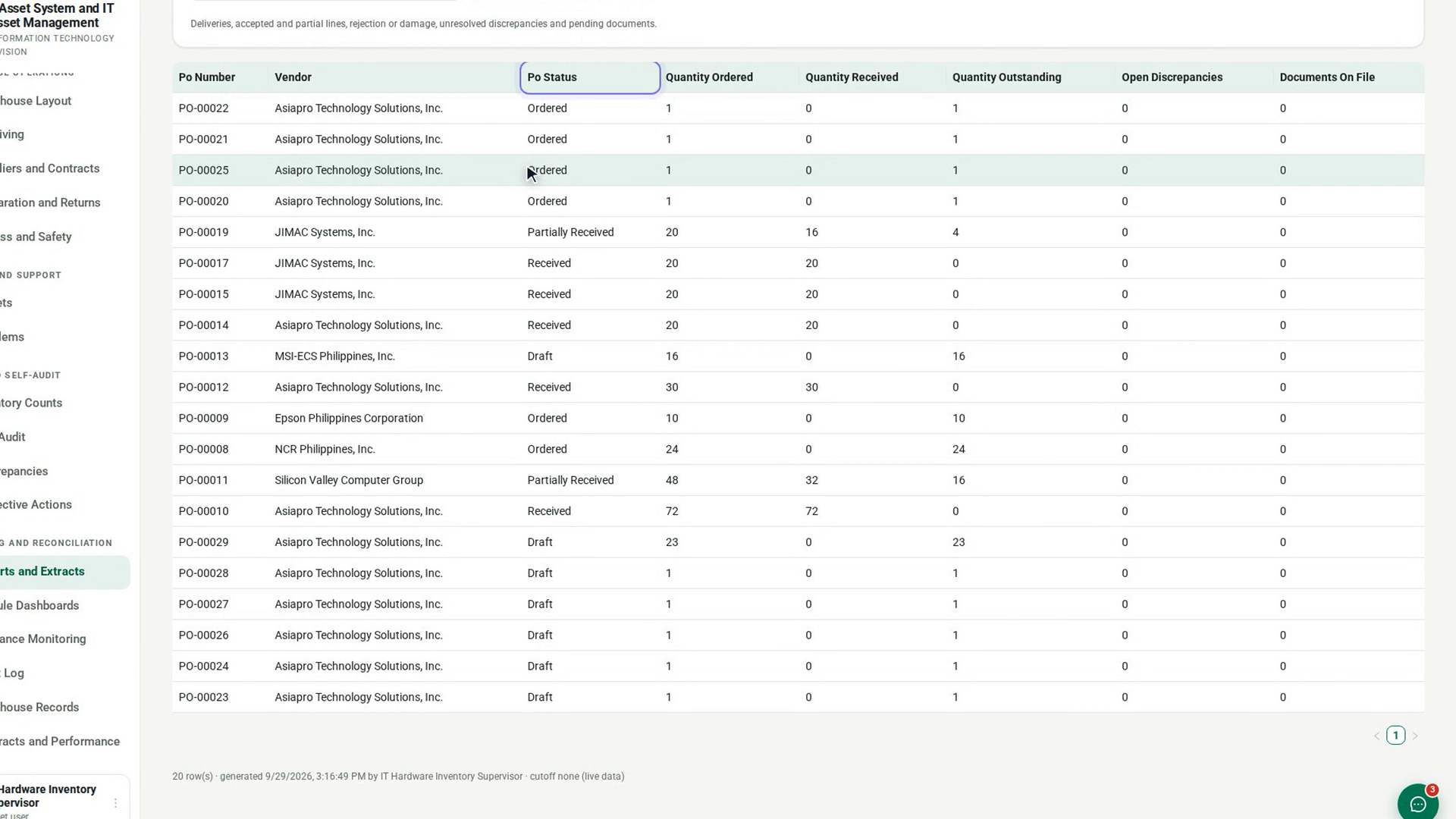
Step 6: Check where the figures came from
Watch how
Running a report is itself recorded in the Audit Log, with who ran it and how many rows it returned.